
How Long Does Probate Take in North Carolina?
When a loved one passes away, families are often left trying to navigate both emotional and legal responsibilities at the same time. One of the most common questions families have during estate administration is how long the probate process may take in North Carolina. The answer depends on several factors, including the size and complexity of the estate, whether there is a valid will, and whether disputes arise during the process. While some estates move through probate relatively smoothly, others can take much longer to resolve. If you are navigating the probate process in North Carolina, understanding the general timeline can help you know what to expect.What Is Probate?
Probate is the legal process of administering a deceased person’s estate. This process may involve:
- Validating a will
- Appointing an executor or administrator
- Identifying and valuing assets
- Paying debts and taxes
- Distributing assets to beneficiaries
In North Carolina, probate is typically handled through the Clerk of Superior Court in the county where the deceased person lived.
For a more detailed overview of the probate process, readers can visit the firm’s Probate page.
Typical Probate Timeline in NC
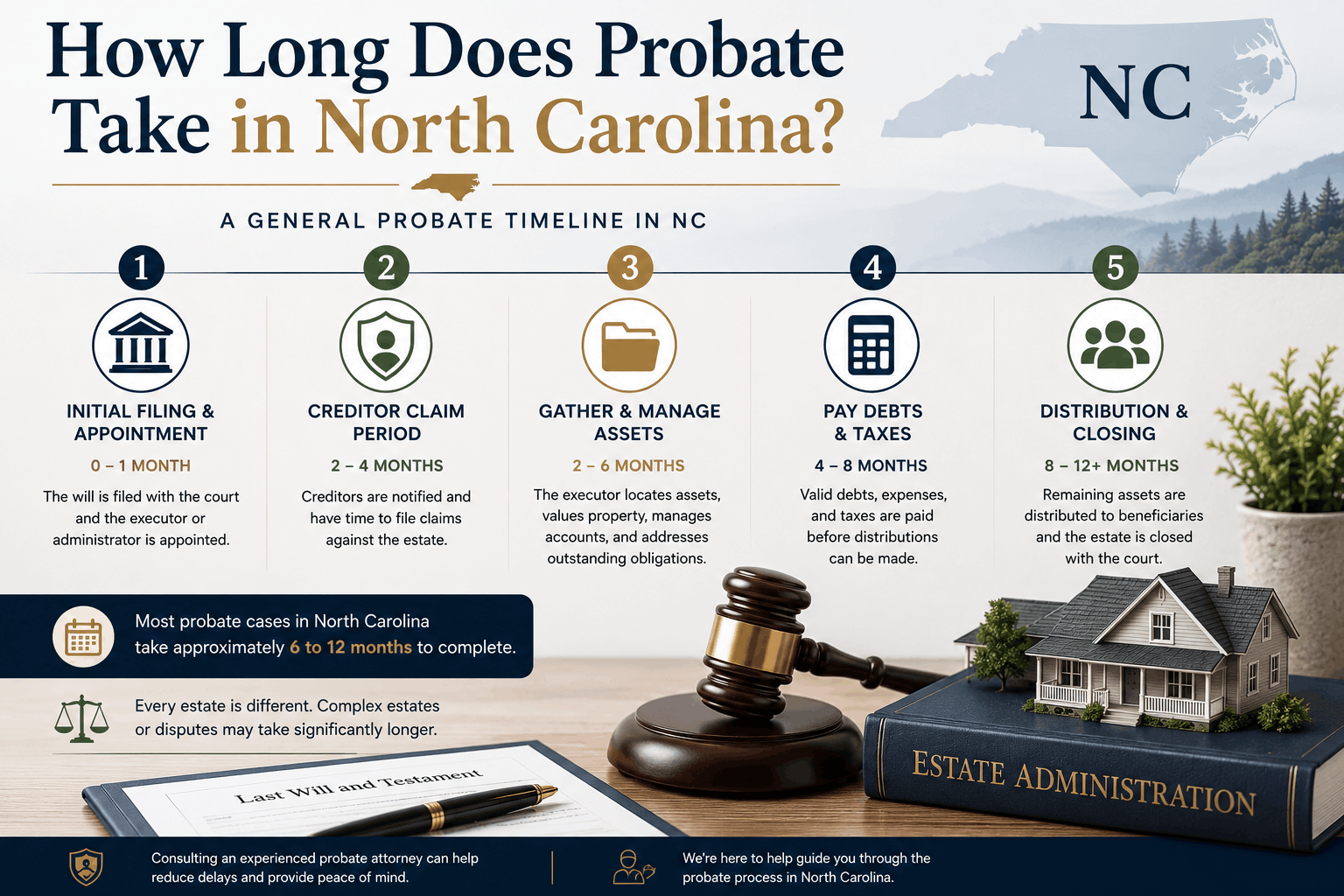
Every estate is different, but many probate cases in NC take approximately 6 to 12 months to complete. More complicated estates can take significantly longer.
Here is a general breakdown of the probate timeline in North Carolina:
Initial Filing and Appointment of Executor
The probate process usually begins shortly after death when the will is filed with the court and the executor or administrator is officially appointed.
This phase may take a few days to several weeks depending on the circumstances and court scheduling.
Creditor Notice Period
North Carolina law requires a creditor claims period during probate. Creditors must be given an opportunity to file claims against the estate.
This alone can add several months to the timeline, even in straightforward estates.
Gathering and Managing Estate Assets
The executor or administrator is responsible for locating assets, valuing property, managing financial accounts, and addressing outstanding obligations.
If the estate includes:
- Real estate
- Business interests
- Multiple bank accounts
- Investments
- Difficult-to-value assets
the process may take longer.
Paying Debts and Taxes
Before assets can be distributed to beneficiaries, valid debts and expenses must be addressed.
This can include:
- Funeral expenses
- Medical bills
- Credit card debt
- Taxes
- Administrative expenses
Final Distribution and Closing the Estate
Once debts are resolved and court requirements are satisfied, the remaining assets can be distributed and the estate can be formally closed.
Simple estates may close within several months, while more complex probate administration matters may remain open for a year or longer.
What Can Delay Probate in North Carolina?
Several issues can extend the probate process in NC.
Family Disputes
Disagreements between beneficiaries or heirs can significantly delay administration of the estate.
Will Contests
If someone challenges the validity of the will, probate may become much more time-consuming and complex.
Difficulty Locating Assets
Missing financial records or unknown assets can create delays while the executor gathers information.
Real Estate Complications
Selling property, transferring deeds, or handling out-of-state real estate can increase the probate timeline.
Executor Delays
Executors have significant responsibilities during probate. Delays in filing paperwork, responding to creditors, or organizing financial information can slow the process.
Does Every Estate Go Through Probate?
Not all assets necessarily pass through probate in North Carolina.
Some assets may transfer automatically, including:
- Jointly owned property
- Accounts with designated beneficiaries
- Certain trust assets
- Payable-on-death accounts
North Carolina also offers simplified procedures for some smaller estates.
Families who want to better understand estate settlement responsibilities can also review the firm’s Estate Administration page.
Can Probate Be Avoided or Made Faster?
Although probate cannot always be avoided, there are steps that may help simplify the process and reduce delays.
Proper estate planning tools may help, including:
- Revocable living trusts
- Beneficiary designations
- Joint ownership arrangements
- Organized financial records
Working with an experienced probate or estate administration attorney may also help executors avoid common mistakes and navigate court requirements more efficiently.
A General Probate Timeline Example
While every estate is unique, a general probate timeline in NC may look something like this:
Month 1
- File will with the court
- Executor or administrator appointed
- Initial notices provided
Months 2–4
- Creditor claim period
- Gathering financial information and assets
- Managing estate property
Months 4–8
- Paying debts and taxes
- Selling or transferring assets if necessary
Months 8–12
- Final distributions to beneficiaries
- Closing the estate
More complex estates involving disputes or substantial assets may take much longer.
When Should You Contact a Probate Attorney?
Probate can quickly become overwhelming, especially when families are grieving or managing complicated financial and legal issues.
You may want to speak with a probate attorney if:
- You have been named executor of an estate
- There is no will
- Family disputes have arisen
- The estate includes significant assets or property
- You are unsure how to proceed with probate administration in NC
Having legal guidance may help reduce delays, avoid costly mistakes, and provide clarity during the estate administration process.
To learn more about probate representation in North Carolina, visit the firm’s Probate page.
Conclusion
So, how long does probate take in NC?
For many estates, the probate process in North Carolina takes between 6 and 12 months, but the exact timeline depends on the complexity of the estate and whether complications arise.
Understanding the NC probate process and seeking guidance when needed can help families navigate estate administration more effectively and with greater peace of mind.
Questions About Probate or Estate Administration?
If you are unsure whether probate can be handled without a lawyer or want guidance on the next steps,
speaking with an attorney can help provide clarity.
To discuss your situation, please use our contact form
or call (828) 456-9436.